







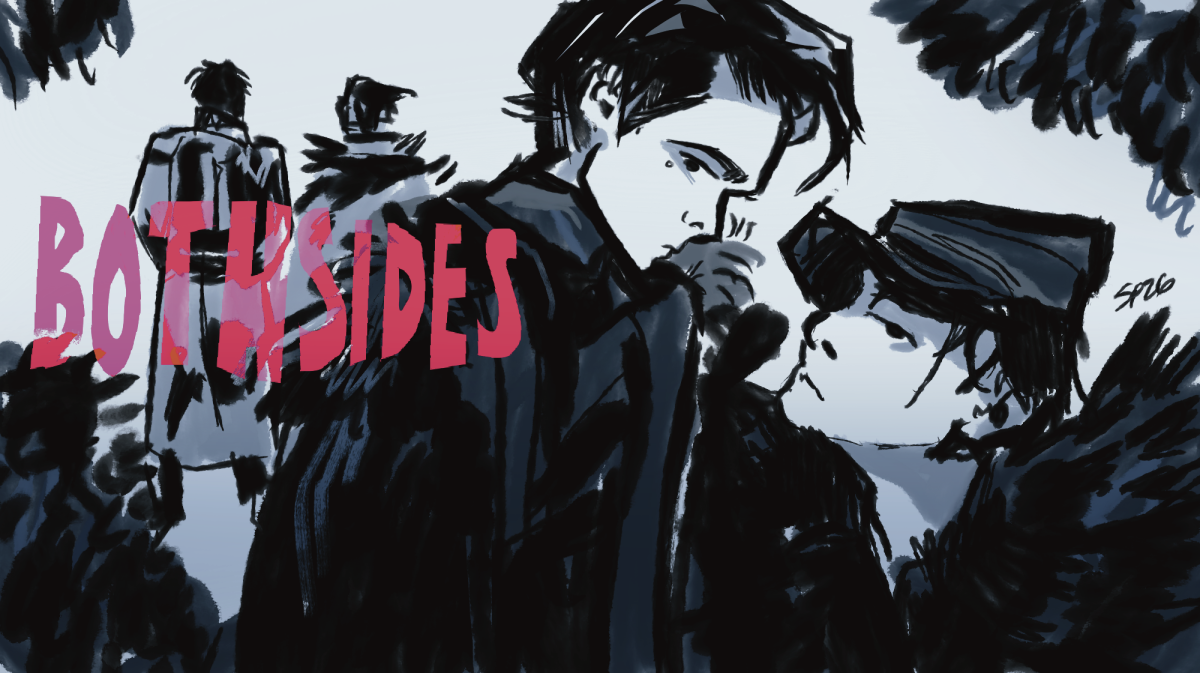














Nothing screams drama more than a wedding disaster. Released on April 3 and appropriately titled “The Drama,” Kristoffer Borgli’s film is a psychological thriller disguised as a romantic comedy. At its core, the movie explores a controversial moral question: Can people truly change from who they once were?
The movie begins in the days before the wedding of 30-year-old Emma Harwood (Zendaya) and her soon to be husband, Charlie Thompson (Robert Pattinson).
Though deeply in love and filled with a nervous excitement to be wed (who wouldn’t be?), Emma soon confesses on a drunken night out with their friends Rachel (Alana Haim) and Mike (Mamoudou Athie) that back in high school, she was terrifyingly close to committing a mass school shooting. As a result, both her fiance and her friends grow fearful and distrustful of her.
The dilemma over what to make of the confession comes with a few nuanced layers. Emma never fully went through with the act, which raises the question of intention versus action.
She was also young and an isolated high schooler struggling with her mental health, and present-day Emma demonstrates clear remorse for her actions. Whether that moment should define who she is today is the question the film throws back at its audience.
Ironically, the real drama comes less from Emma and more from Charlie, whose paranoid reaction grows increasingly extreme.
The rest of the movie depicts Charlie’s internal conflicts as he attempts to reconcile with the fact that he is engaged to a “psychopath,” and in his desperate efforts to save their supposedly doomed relationship, ultimately commits a terrible act out of hysteria.
Whether Emma’s confession truly deserves the level of ostracism she faces from those around her is meant for the audience to process.
By contrast, other disturbing acts in the film are treated by her friends far more lightly. For instance, Rachel admits that she once left a child locked overnight in a closet inside a trailer in the woods, yet this revelation is largely glossed over. As the plot intensifies, what stands out most is Borgli’s directorial choices to depict the characters’ mental states through vivid and rapid flashbacks: 15-year-old Emma with blood dripping down her ear, the upcoming wedding soaked in red or even adult Emma posing with a gun. These sudden stop-and-go movements echo the film’s motif of gunshots and increases the sense of urgency.
The dark comedy and situational humor also adds an extra dash of seasoning to scenes that might otherwise be pure nerve-wracking tension.
However, the film should have taken a more serious look at the youth mental health crisis in America.
Instead, the movie often leans more into stylish sensationalized flashes of violence to build tension between Emma and Charlie in the present, rather than exploring Emma’s backstory and what led her to that point.
It brushes against bigger issues—America’s culture of gun violence, along with the racial and gender dynamics tied to it—but never really digs into it.
As a result, the idea of school gun violence feels more like a provocative twist meant to shock the audience rather than a serious examination with the weight and care the subject demands. That said, if you’re watching the movie to sink into the drama, then it absolutely nails it. The sound effects are well-timed, playing with tension and releases at just the right moments.
Even the snap of a camera flash is made to sound eerily close to a gunshot, keeping both the characters on screen and the audience outside of it jumpy and on the edge. For better or worse, “The Drama” certainly doesn’t miss its shot.