


















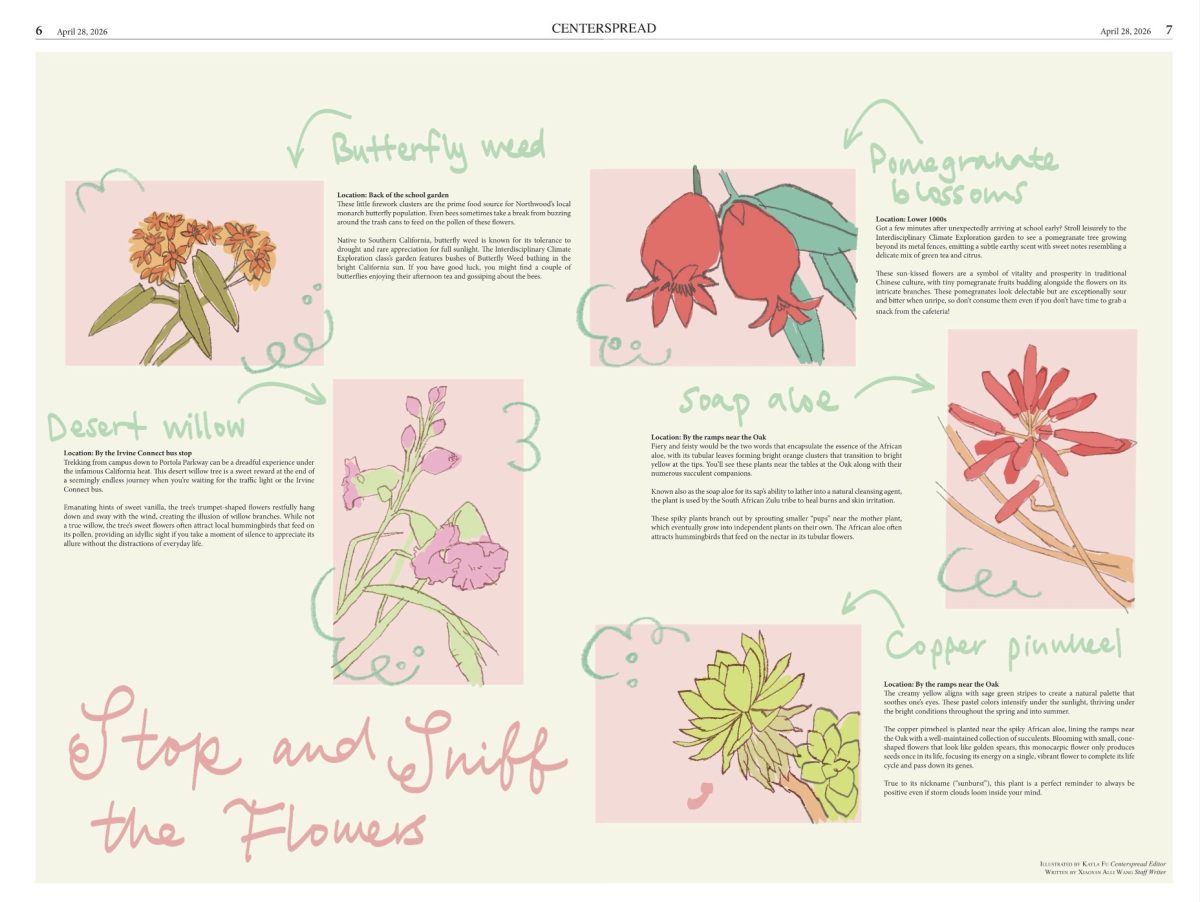

























Butterfly Weed
Location: Back of the school garden
These little firework clusters are the prime food source for Northwood’s local monarch butterfly population. Even bees sometimes take a break from buzzing around the trash cans to feed on the pollen of these flowers. Native to Southern California, butterfly weed is known for its tolerance to drought and rare appreciation for full sunlight. The Interdisciplinary Climate Exploration class’s garden features bushes of Butterfly Weed bathing in the bright California sun. If you have good luck, you might find a couple of butterflies enjoying their afternoon tea and gossiping about the bees.
Desert willow
Location: By the Irvine Connect bus stop
Trekking from campus down to Portola Parkway can be a dreadful experience under the infamous California heat. This desert willow tree is a sweet reward at the end of a seemingly endless journey when you’re waiting for the traffic light or the Irvine Connect bus. Emanating hints of sweet vanilla, the tree’s trumpet-shaped flowers restfully hang down and sway with the wind, creating the illusion of willow branches. While not a true willow, the tree’s sweet flowers often attract local hummingbirds that feed on its pollen, providing an idyllic sight if you take a moment of silence to appreciate its allure without the distractions of everyday life.
Pomegranate blossoms
Location: Lower 1000s
Got a few minutes after unexpectedly arriving at school early? Stroll leisurely to the Interdisciplinary Climate Exploration garden to see a pomegranate tree growing beyond its metal fences, emitting a subtle earthy scent with sweet notes resembling a delicate mix of green tea and citrus. These sun-kissed flowers are a symbol of vitality and prosperity in traditional Chinese culture, with tiny pomegranate fruits budding alongside the flowers on its intricate branches. These pomegranates look delectable but are exceptionally sour and bitter when unripe, so don’t consume them even if you don’t have time to grab a snack from the cafeteria!
Soap aloe
Location: By the ramps near the Oak
Fiery and feisty would be the two words that encapsulate the essence of the African aloe, with its tubular leaves forming bright orange clusters that transition to bright yellow at the tips. You’ll see these plants near the tables at the Oak along with their numerous succulent companions. Known also as the soap aloe for its sap’s ability to lather into a natural cleansing agent, the plant is used by the South African Zulu tribe to heal burns and skin irritation. These spiky plants branch out by sprouting smaller “pups” near the mother plant, which eventually grow into independent plants on their own. The African aloe often attracts hummingbirds that feed on the nectar in its tubular flowers.
Copper pinwheel
Location: By the ramps near the Oak
The creamy yellow aligns with sage green stripes to create a natural palette that soothes one’s eyes. These pastel colors intensify under the sunlight, thriving under the bright conditions throughout the spring and into summer. The copper pinwheel is planted near the spiky African aloe, lining the ramps near the Oak with a well-maintained collection of succulents. Blooming with small, cone- shaped flowers that look like golden spears, this monocarpic flower only produces seeds once in its life, focusing its energy on a single, vibrant flower to complete its life cycle and pass down its genes. True to its nickname (“sunburst”), this plant is a perfect reminder to always be positive even if storm clouds loom inside your mind.