








































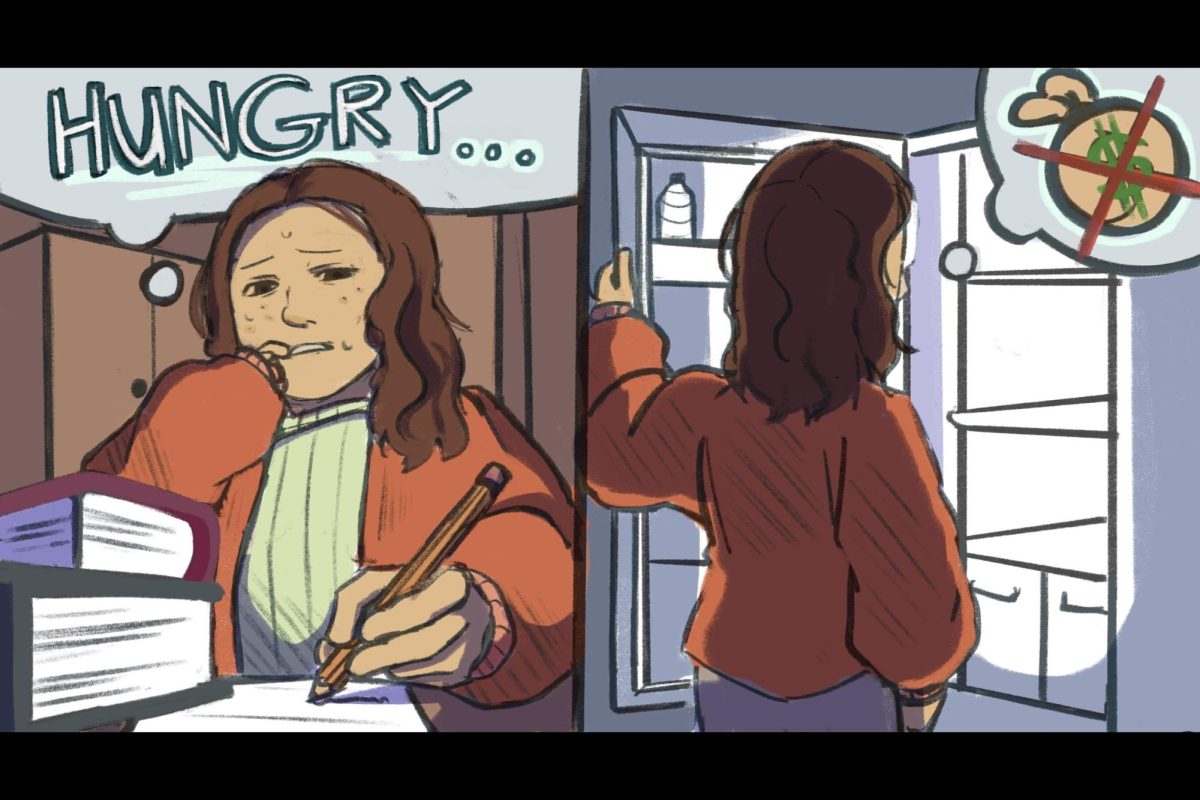
Tonight, millions of Americans will go to bed hungry. Not because food doesn’t exist, but because it isn’t within reach as many people are blocked by low income, high living costs and the quiet shame that keeps them from seeking support.
The U.S. Department of Agriculture defines food insecurity as having “limited or uncertain access to adequate, nutritious food due to financial constraints.” This translates into 47.4 million adults and 7.2 million children living in food-insecure households across the United States alone, according to the USDA. Many who are food insecure experience stigma characterized by an unwillingness to work or irresponsibility. However, these misconceptions are far from the truth.
According to the nonprofit Move For Hunger, in 1950 a loaf of bread cost 12 cents, which was 16% of the hourly federal minimum wage; but in 2023, the same loaf costs around $2.50 to $4.00, which is 34% to 55% of the minimum wage. Hunger persists because wages have not kept pace with the cost of housing, healthcare and groceries. Low-wage work and unstable hours limit access to benefits and create a fragile financial reality in which food becomes the most adjustable expense. Safety net programs such as the Supplemental Nutrition Assistance Program and the National School Lunch Program are meant to buffer this instability. Yet, there is a lack of funding and eligibility restrictions that limit who qualifies for assistance and how much support they receive.
Future generations can address this problem by increasing awareness. Simple actions like volunteering or donating to food aid organizations such as the Second Harvest Food Bank in Irvine can leave a lasting impact. These organizations often operate with inconsistent volunteer support and an unreliable flow of donations and resources, leaving them unable to address the access to and demand for food.
Even donating non-food items like paper plates, plastic cutlery, extra towels and paper cups all help organizations feed fresh and nutritious meals to people facing food insecurity. From a global standpoint, nonprofit organizations like the World Food Programme support emergency relief to families during conflicts or natural disasters, as well as provide nutritional aid for children, pregnant women and nursing mothers.
Ultimately, food insecurity is not a reflection of individual failure but of economic inequality and political choices. The stigma surrounding hunger only deepens the harm, obscuring the larger systemic forces that drive chronic hunger. Individuals can help meet urgent needs while pushing for broader changes to make hunger far less common in the first place.