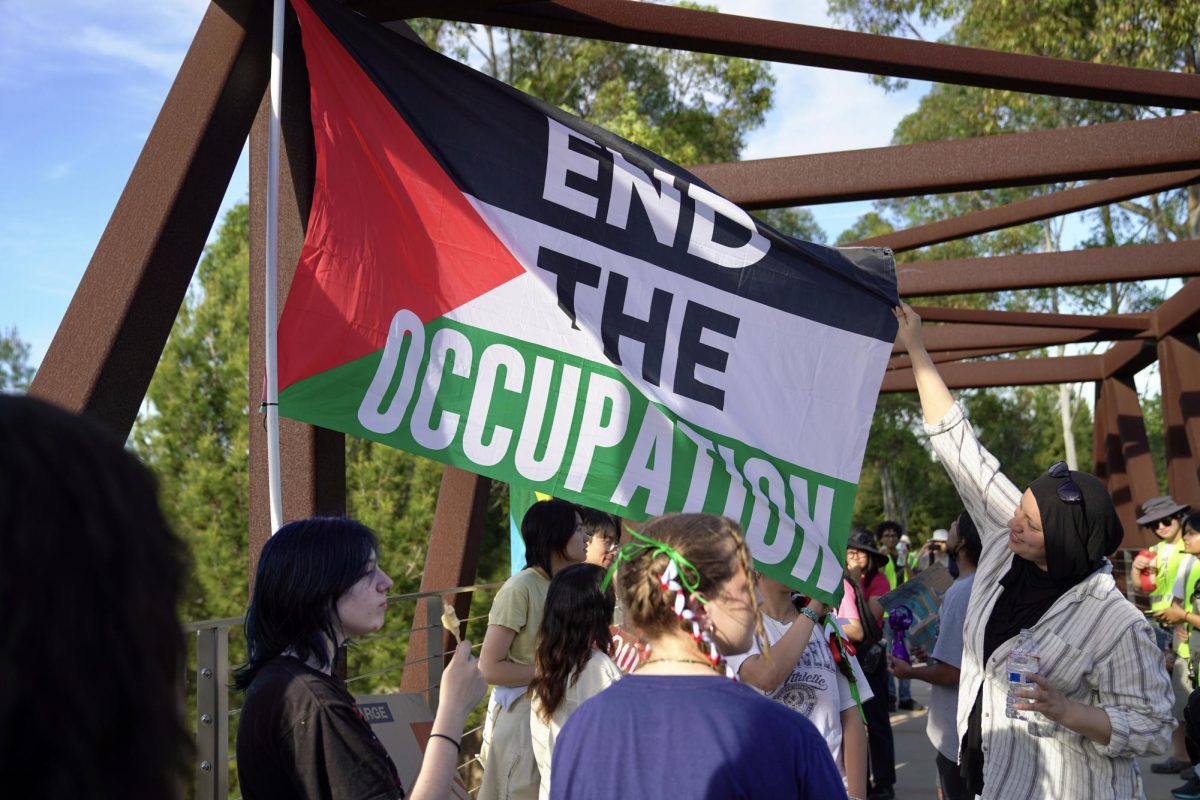
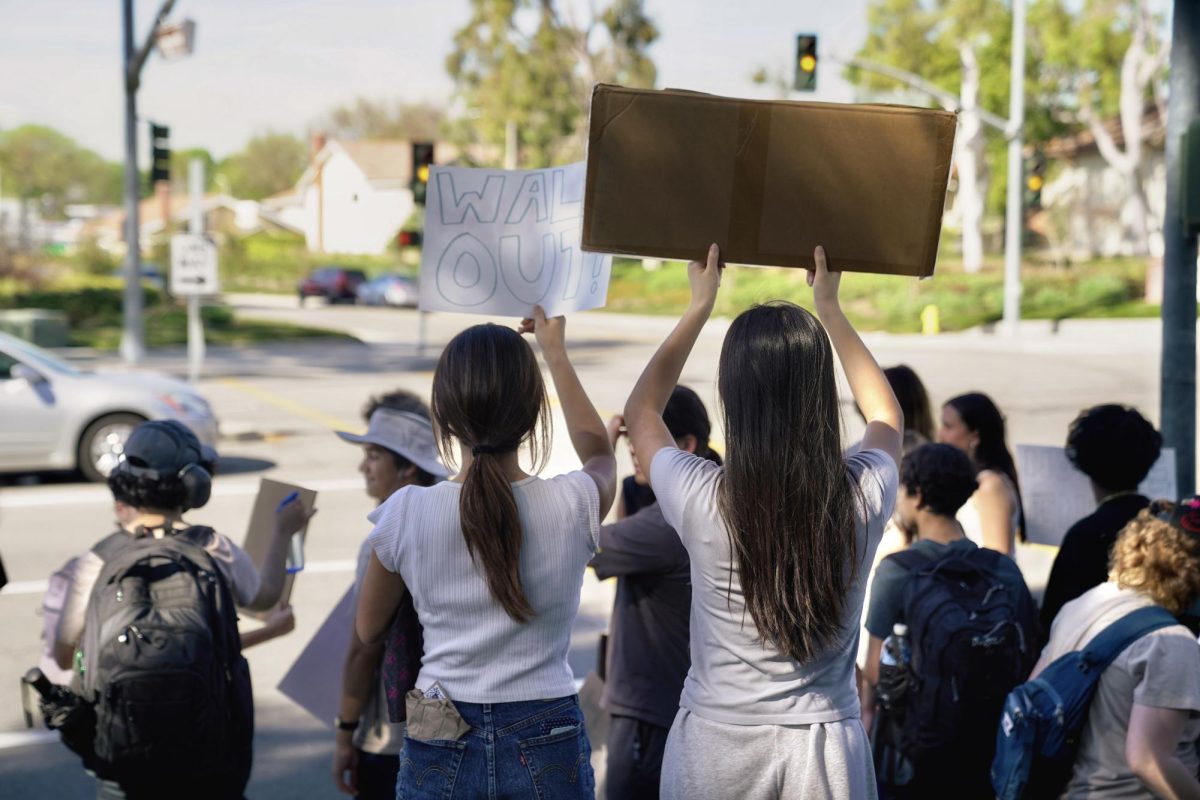









Public speeches, bold signs and crowds advocating for a cause: Although these forms of protest paint an image that you need to raise voices and start dramatic confrontations in order to bring about change, not all resistance takes the same form.
Here are some ways students at Northwood are making a statement through art.
 Ashley Zheng (10): Between Two Worlds
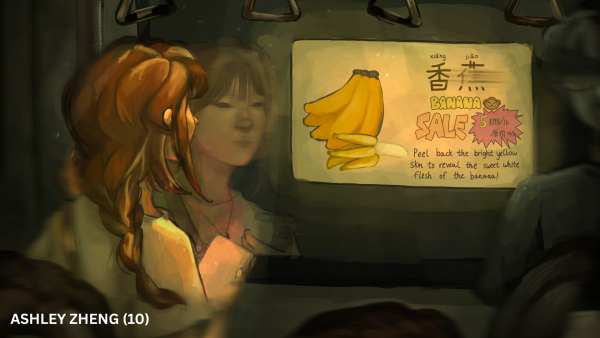
A dimly lit metro station stretches across sophomore Ashley Zheng’s digital canvas, washed in desaturated green tones.
A glowing advertisement beams overhead, its brightness cutting sharply against the darker background. At the center stands a self-portrait: still, isolated and caught between movement and stagnation.
Zheng created the piece under the theme “East Meets West” for the Asian American Literature event last summer.
For her, the theme immediately surfaced years of internal conflict surrounding identity.
“The idea behind it is just being able to represent the idea of feeling foreign in the land that is technically yours,” Zheng said. “I’ve always been labeled as being a foreigner, even if I was in the country that all my family is from.”
She used the fast-moving train as a metaphor for the overwhelming judgment she felt about her identity.
The bright billboard in the piece features bananas, which is a reference to the stereotype describing Asian Americans as “yellow on the outside, but white on the inside.”
While the other commuters blur forward in motion, her figure remains still. The contrast represents how others appear to move freely through life, while those grappling with identity can feel stuck.
“With the reflections, it’s slightly blurred to see how you don’t fully understand where you also stand in yourself, and your identity is confusing with all these external thoughts that are constantly clashing into it,” Zheng said.
Painting is Zheng’s preferred medium because it shaped a significant portion of her life.
With over 10 years of experience in both visual and performing arts, she finds that it allows her to communicate emotions that are difficult to articulate directly.
 Sadik Premjee (11): Emphasizing Unity
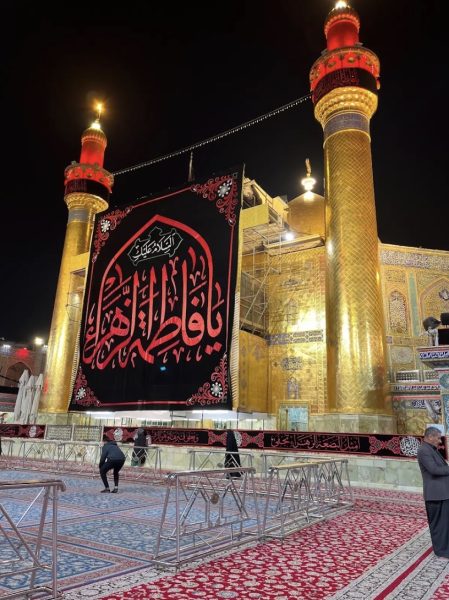
Under the glow of gold-lit domes and intricate architecture, junior Sadik Premjee’s photograph features a shrine in Iraq dedicated to Ali ibn Abi Talib, a prominent figure in Islam, particularly its Shia sect.
“The feeling of the atmosphere is really peaceful,” Premjee said. “Everyone’s trying to seek inner peace when they go in a humble manner. I was honestly amazed by how beautiful the shrine was. It was 4 a.m. and I wasn’t tired at all. I just felt really inspired at that moment.”
Premjee has observed a growing division both between Muslims and non-Muslims and within the Muslim community itself, particularly between Shia and Sunni Muslims.
To him, that split contradicts the very spirit of the shrine.
“It’s really heartbreaking to see, especially at a time when there’s so much hatred against Muslims themselves. We should be uniting together and countering those beliefs and being role models to show that Muslims are not hateful,” Premjee said. “We should be protecting each other.”
Through this image, he hopes to advocate for unity and encourage people of all backgrounds to move beyond labels and come together.
“Visual storytelling is just a really powerful way of expressing my message,” Premjee said. “It just connects with you on a different level emotionally. You can formulate your own message from the art without someone telling it to you. When you’re able to interpret it yourself, I feel like it can be really, really powerful.”