












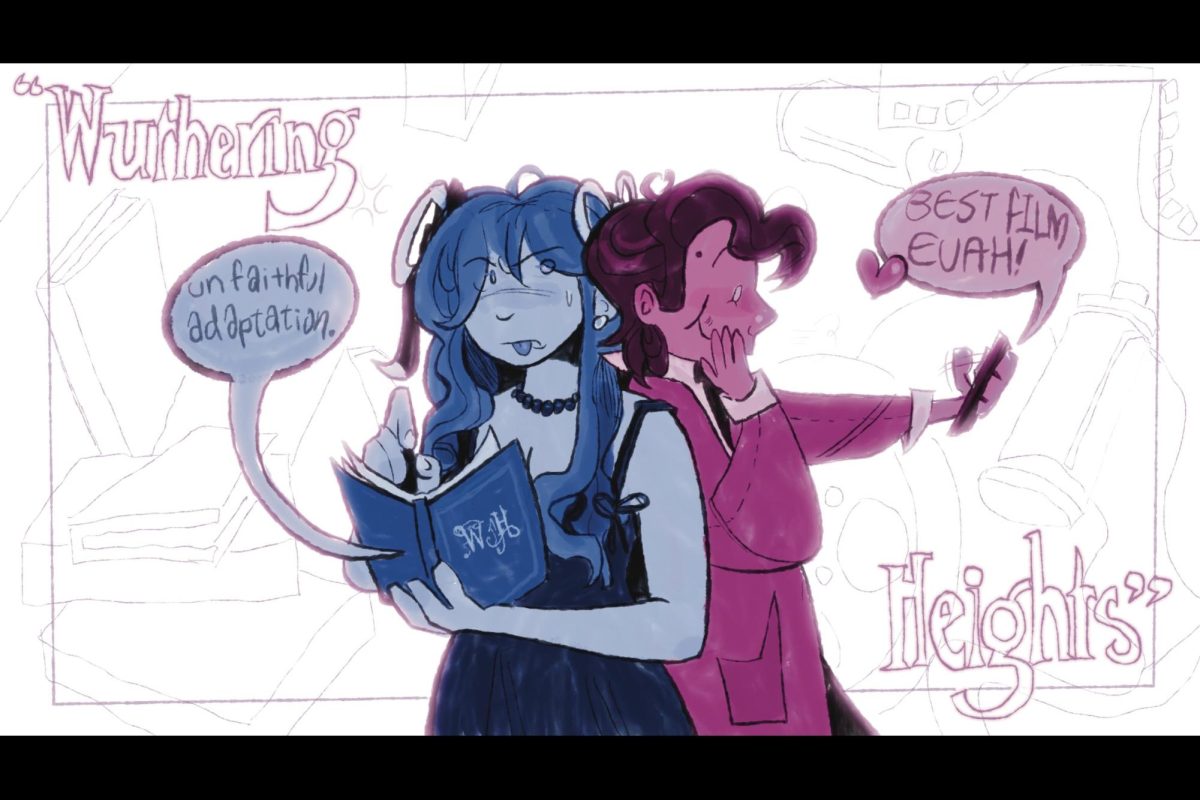
Every time a beloved novel is adapted on-screen, public response is usually the same: outrage. People take to social media, comparing scenes from the book and movie, upset that filmmakers “ruined” a literary masterpiece.
However, just because a book doesn’t follow every beat of a story perfectly doesn’t mean it doesn’t have its creative merits. Movie adaptations should be free to interpret and reshape a story, but only when deviations remain faithful to the original work’s core themes and author’s intent.
One of the main challenges surrounding adaptations is translating the depth of a written story visually, where directors must often cut important moments for time. As a result, films can feel disconnected from their source material.
In addition, literature heavily relies on imagination while film depends on visual storytelling, so fully encapsulating every aspect of a novel may be difficult. Many critics argue that adaptations threaten the original author’s ownership of the story, especially when the author is not involved, causing the original plot and themes to be diluted in favor of cinematic appeal.
“I did not write the script or help make the movie. I didn’t even see it, because I didn’t want the movie version to change the way I saw my characters or settings in the series,” Rick Riordan, author of the renowned Percy Jackson series, wrote on his website of the series’ movie adaptation. “I believe if you have a book, you already have the best version of the story. There is no way a movie can ever create images as good as the ones you actively create in your imagination as you read.”
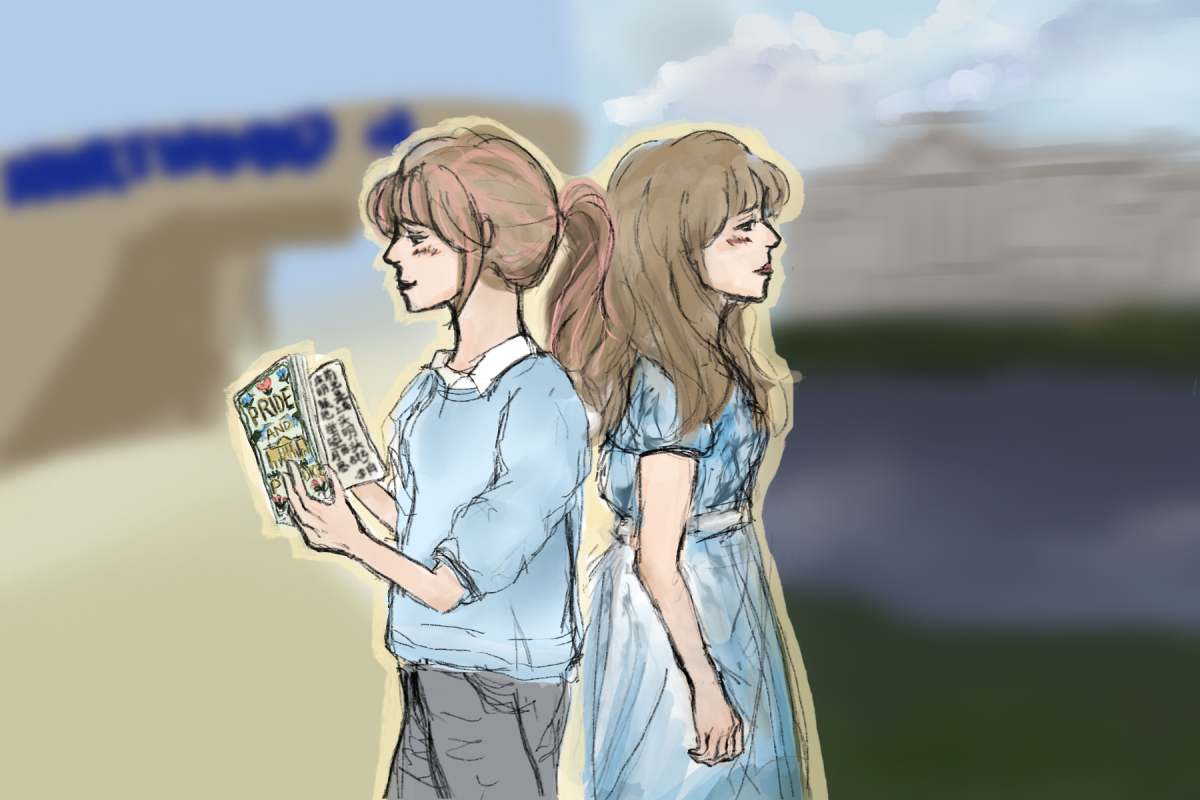
One recent example that has reignited this debate is “Wuthering Heights,” released on Feb. 13; rather than recreating Emily Brontë’s novel scene by scene, the film’s creative liberties raise debates on whether it’s losing the story or gaining fresh ideas.
The most striking aspect of “Wuthering Heights” is undoubtedly its use of scenery and atmosphere. Director Emerald Fennell conveys the characters’ psychological state and circumstances using ominous visual composition rather than dialogue. For example, instead of words, the harsh sound of the wind sweeping across the moors and the gloomy and muted color palette tell the story.
In the film, Hindley, Catherine’s brother, a pivotal character in driving the novel’s narrative, does not appear at all. At first, his removal feels risky, since much of the main male protagonist Heathcliff’s resentment stems from their relationship.
However, the movie redistributes the tension through the household’s atmosphere and Mr. Earnshaw’s presence instead. While a key character is missing, the core themes of cruelty and emotional neglect remain the same. This shift shows that creative liberty can simplify structure without abandoning the story’s emotional foundation.
Furthermore, the decision to stylize the film’s title in quotation marks in the opening scene emphasizes the director’s intention to alert audiences that it is an imaginative version of the novel.
“The thing for me is that you can’t adapt a book as dense and complicated and difficult as this book,” Fennell said in an interview with Fandango. “I can’t say I’m making [the book] ‘Wuthering Heights.’ It’s not possible. What I can say is I’m making a version of it. And there’s a version where I wanted stuff to happen that never happened. And so it is ‘Wuthering Heights,’ and it isn’t.”
Creative liberty in adaptations will always make audiences uneasy, especially when it is compared to the material that fans hold close to their hearts. Instead of critically expecting a movie to remain faithful to every detail of a book, movie adaptations should be allowed flexibility and be viewed through the lens of an entirely new creative piece loosely inspired by existing works.