






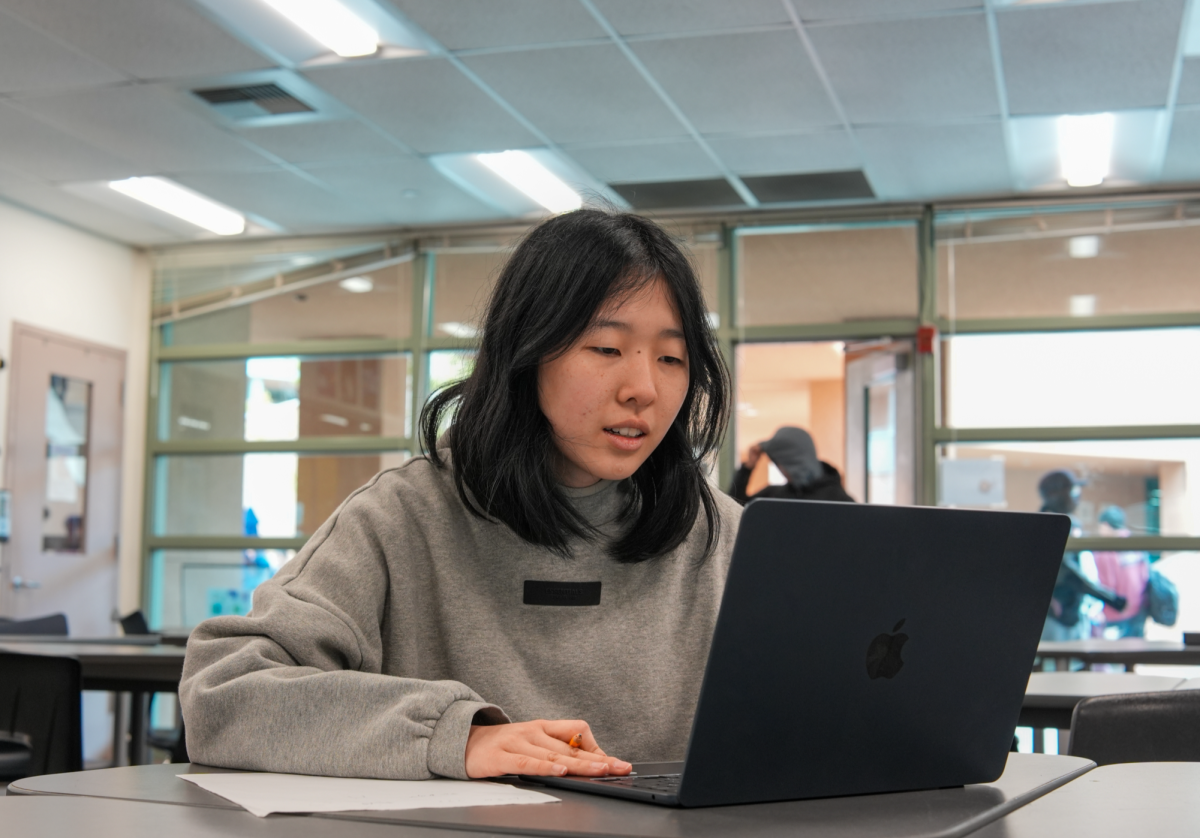



























Northwood classrooms are nothing if not consistent. Aside from the science classrooms’ lab benches, most students have the wedge-shaped, identical seats memorized.
As schools move toward flexible seating options, Northwood should allow it in classrooms as a practical way to accommodate preferred working environments and comfort.
Flexible seating gives students agency by allowing them to choose the workspace that helps them to stay on task. This is because when a student cannot focus in a fixed seat, they might start fidgeting as a way to self-correct, causing their attention to drift away from the lesson.
“The closest thing I’ve honestly had to flexible seating is in one class we had these chairs that would actually recline too, which is just incredible,” sophomore Veeresh Kale said. “It made me feel more like a human rather than a piece of concrete. I felt like [the chairs] just weren’t the right shape for me.”
At Marina High School in Huntington Beach, for example, where flexible seating choice was available to students, the results were largely positive. Students reported a strong preference for the new arrangement, chose seating based on academic needs and still remained focused, with teachers noting higher attention spans.
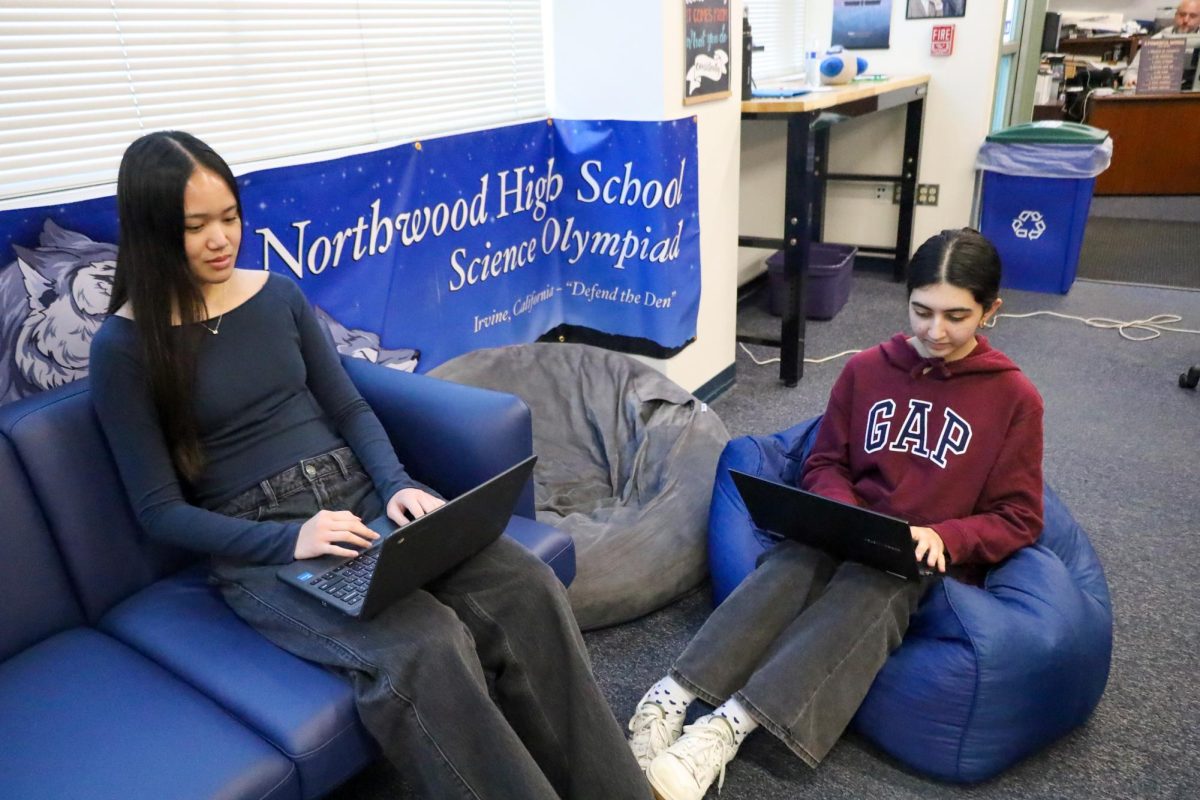
Research on flexible seating shows varied outcomes depending on how seating choices are structured. A study of 138 seventh and eigth grade science students found that different flexible seating options produced different levels of engagement: students reported higher mean engagement scores of 4.21 to 4.35 on a 5-point scale, with floor cushions and beanbag chairs being the most popular choices. However, some students noted that clear expectations were necessary to ensure flexible seating assisted rather than distracted from learning.
This can include guiding students to make effective seating choices based on what helps them stay on task; students can therefore develop self-awareness about their learning needs and choose workspaces that improve their focus.
“I think there’s a balance. With choice comes responsibility. And I think if students can handle both of those, I think it’s a great thing,” Northwood mental health specialist Gina Thompson said. “School is a great place to learn to ask for what you need, and be responsible with what you get.”
For Northwood, practical implementation could start on a small scale. Flexible seating can be navigated slowly through trial and error, analyzing which seating arrangements work and which don’t.
Student choice goes beyond picking classes. An investment in flexible seating is an investment in the environment that students are in for almost half their day. It is worth the cost to make students feel welcome from the moment that they sit down.