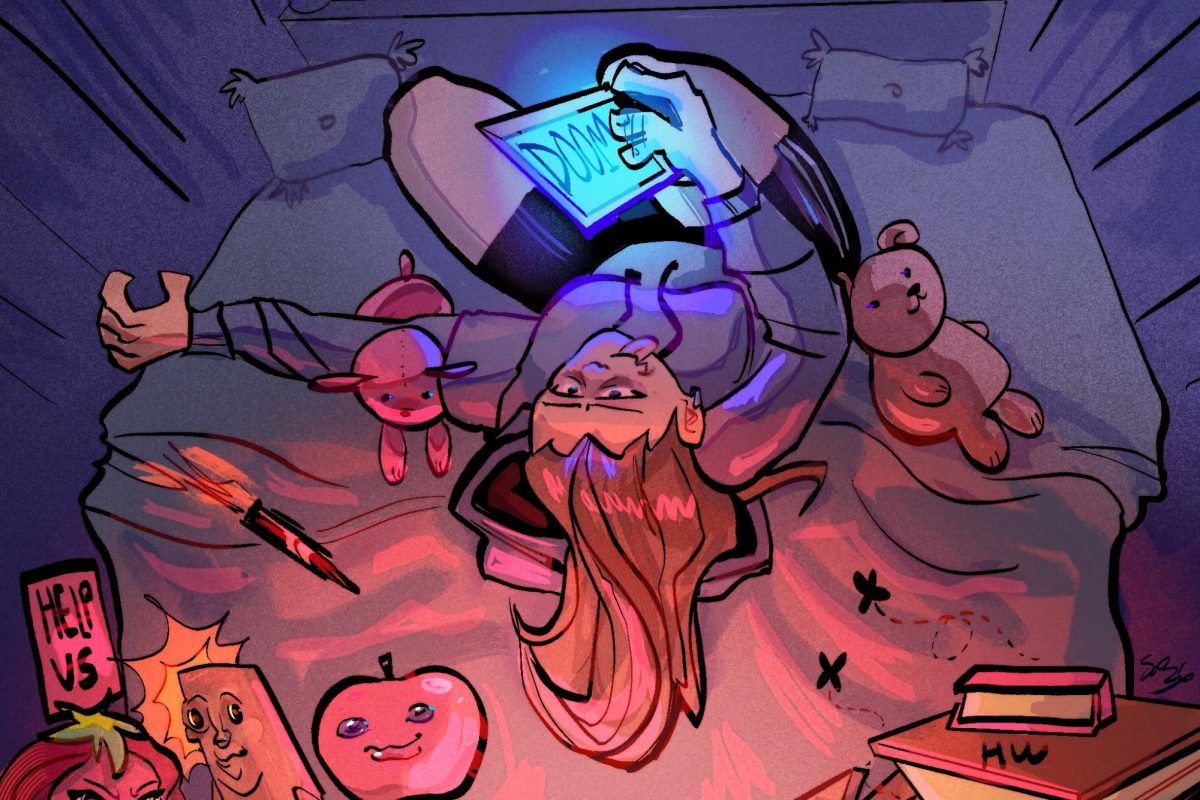
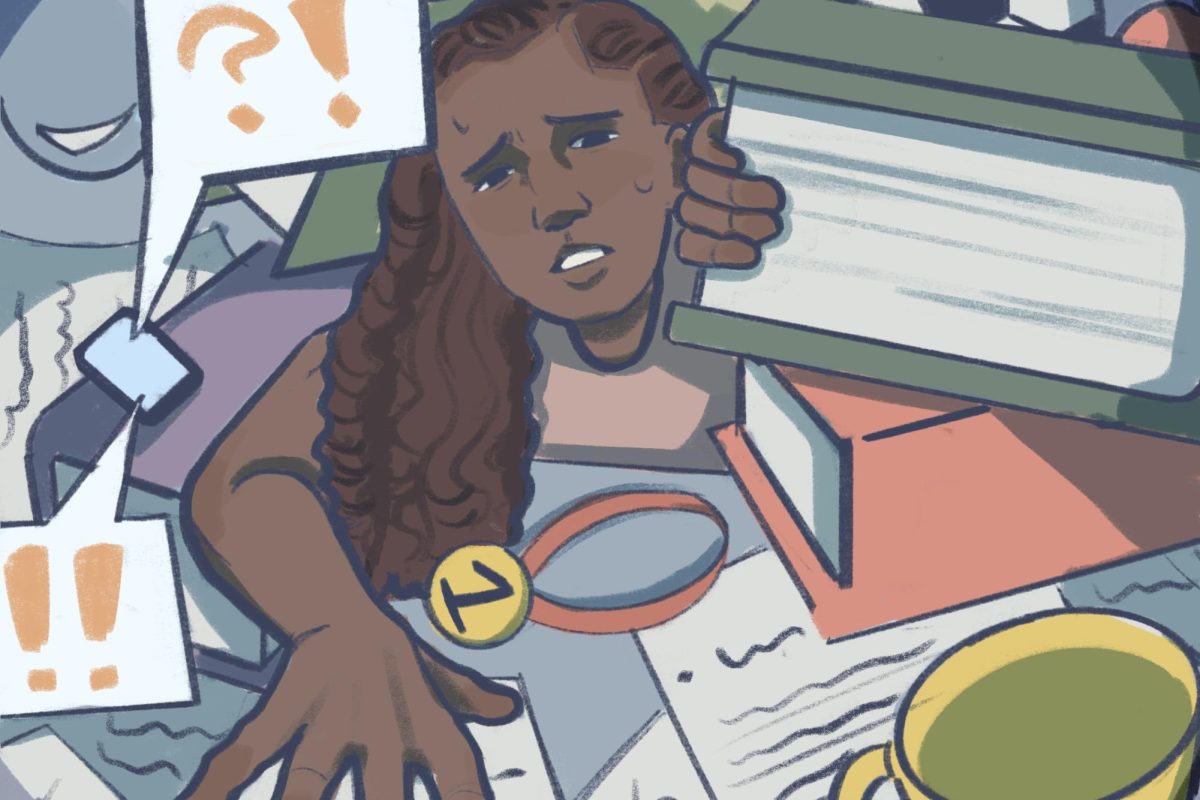








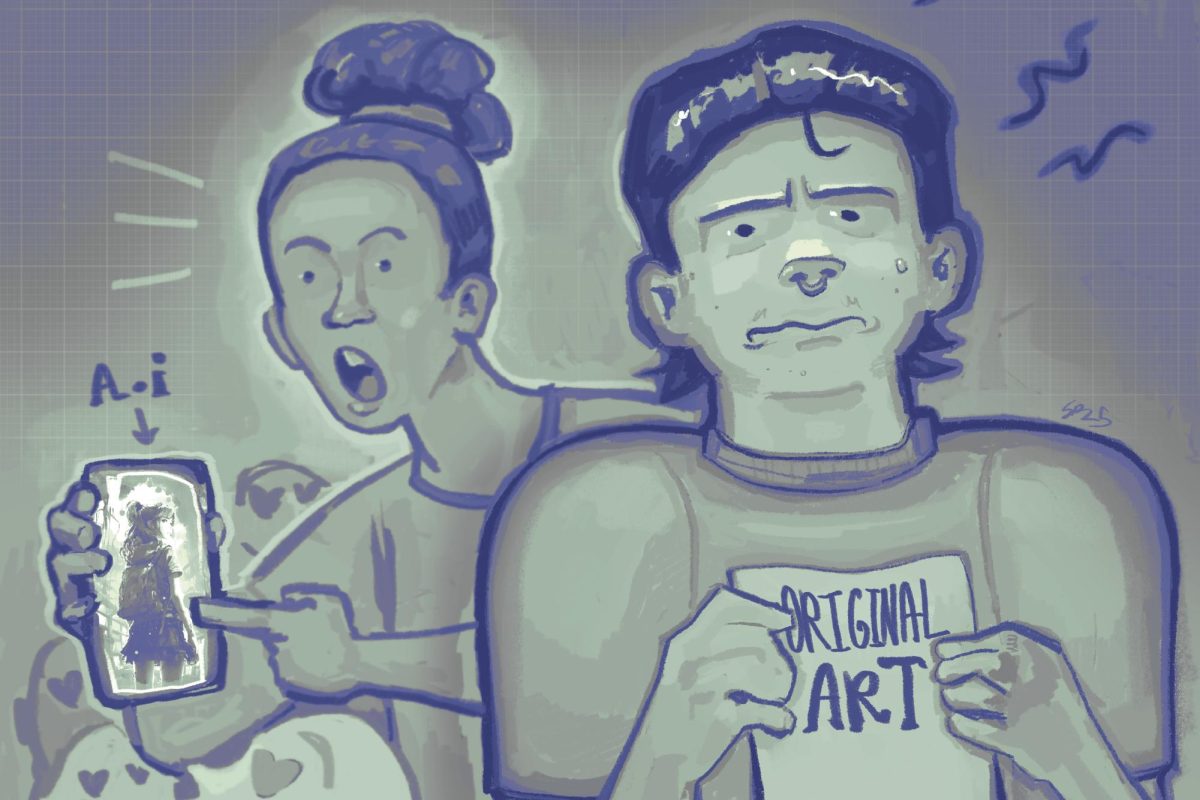
Years spent perfecting every brushstroke, color and texture—only to see an algorithm split out “art” in a matter of minutes. “Art” created by artificial intelligence harms creators by stealing their work and devaluing the human effort behind real creativity.
AI fails to replicate the true essence of art, which is the process of channeling a creator’s emotions into a medium, rather than simply a visually appealing product. According to the Eden House of Art global network of art galleries, art serves as a reflection of our innermost emotions and the world around us.
“It evokes feelings, from joy and sorrow to anger, creating a bridge of understanding between diverse groups of people,” Eden’s website states.
When machines generate images without emotion or lived experience, society begins to lose understanding of why human creativity matters in the first place.
While AI may work for mass-market production where efficiency and cost are prioritized, convenience comes at the expense of originality and emotional depth that define art and fashion. Real art has the ability to capture the process of human imagination, joy and struggle: facets a machine can only attempt to mimic. When AI is treated as equal to human work, it normalizes the idea that artistic skill is irrelevant and replaces respect for creators with respect for speed.
Along with this, robots generating art discourages young artists from investing genuine effort into creation. This turns art from a talent to merely another commodity.
The Santa Ana Patches & Pins market has become a hotspot for those with AI-produced designs to sell their art, facing heavy opposition and protest from real artists.
“It honestly makes me sad to see that raw human artistic expression is being so easily replicated by AI,” junior Sevda Oten said. “People put their whole souls into art, and AI just cannot replicate those emotions.”
Other venues have taken steps to eradicate AI art; according to the San Francisco Chronicle, Thee Stork Club, a music venue in the Bay Area, banned AI-generated promotional art to stand in solidarity with human graphic artists.
Large companies such as DC Comics have also taken steps to shift away from AI art, publicly stating on Facebook and other social media platforms that they promise not to use it.
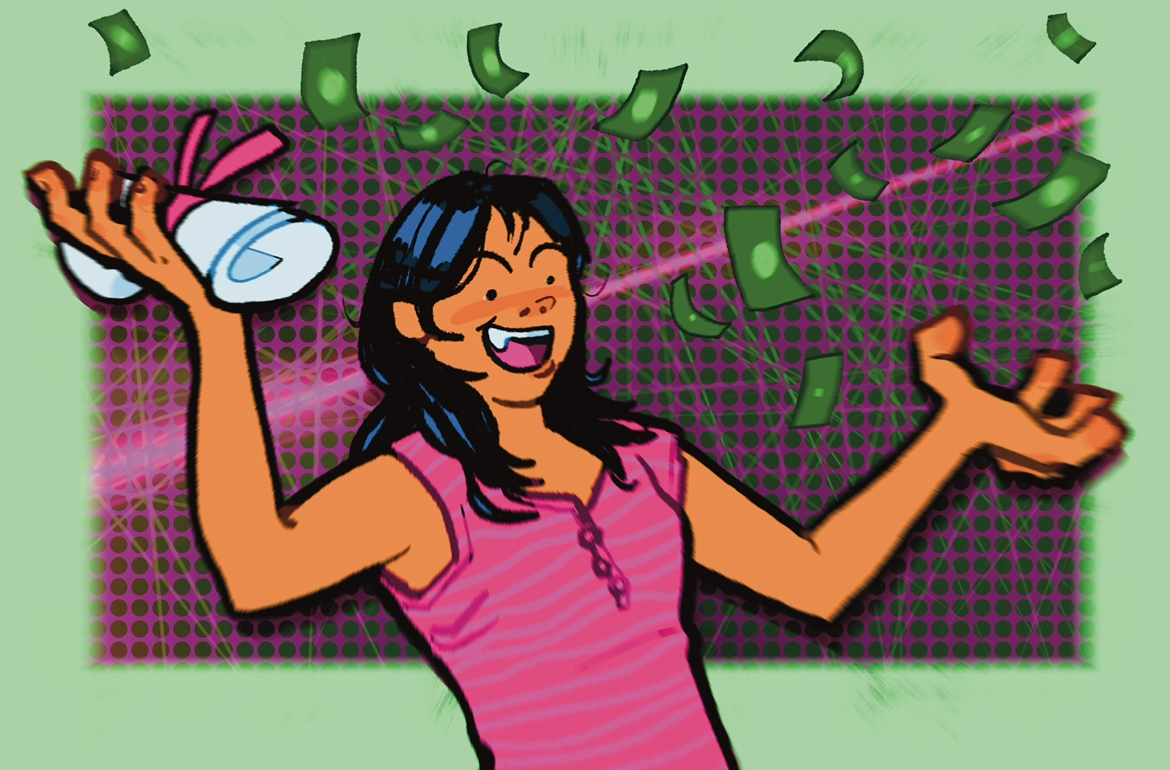
On social media, the conversation around AI art is often overlooked as influencers are constantly “creating” art with Canva, DeepAI and other editing platforms. Although there is not yet evidence showing a correlation between AI art and views, the AI art market was valued at approximately $3.2 billion in 2024 and is projected to reach $40.4 billion by 2033, according to Art Smart. This rapid growth represents a major setback for traditional artists, whose hard work is increasingly being underbought in comparison to AI-generated creations.
As consumers of these AI-generated forms of art, we are directly responsible for the future of artists in society. Before purchasing that AI-generated sticker or indulging into content created by AI, realize that the only people and companies benefitting are those behind a screen of code disguised as something real.